Navigating the HHMI Gilliam Fellowship Application
Updated after HHMI published the official 2027 Applicant Guide on July 1, 2026.
If you're considering applying for the HHMI Gilliam Fellowship, the most important thing to understand up front is that this isn't a fellowship you apply to just for the funding. The Gilliam Fellows Program is built around a mission: supporting scientific excellence alongside a real commitment to making science more inclusive. If that mission resonates with you, the Gilliam can be a transformative experience. If it doesn't, there are other excellent fellowships (NSF GRFP, NIH F31) that will be a better fit and a better use of your application time.
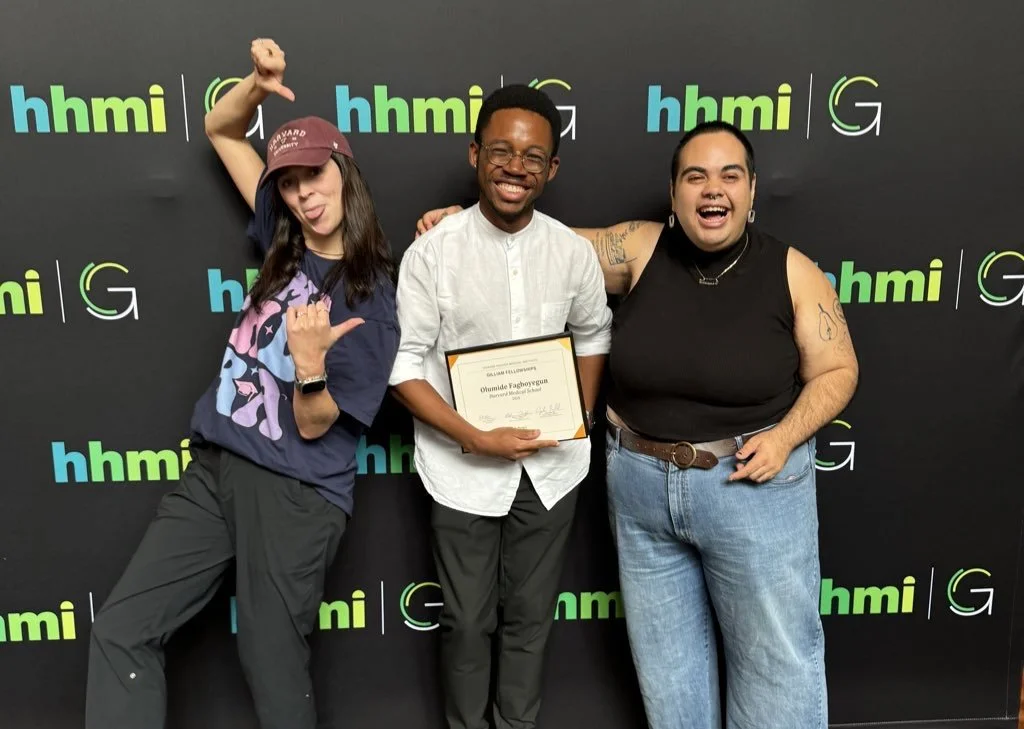
I'm writing this guide as a former Gilliam Fellow. I applied as a second-year PhD student in December 2020, started my fellowship term in September 2021, and completed my three-year term in 2024. I've also worked with many other fellows over the years, both as peers and as mentees, and this guide brings together what I've learned from my own application, from talking to other successful fellows, and from coaching applicants through more recent cycles.
The Gilliam application has evolved significantly since I applied. The 2027 competition (applications open September 1, 2026 and close October 27, 2026) brings the biggest set of changes yet. HHMI has now published the official 2027 guide, and this post reflects it.
If you'd like to see what successful application materials actually look like, I've also shared my own Gilliam essays, fully annotated:
If you want personalized application coaching, here's how we can work together.

My PhD advisor (Dr. Maria Lehtinen) and I together soon after receiving the notification that we’d been awarded a Gilliam Fellowship!
Understanding the HHMI Gilliam Fellowship
The Gilliam isn't just an early-career stipend. A few things set it apart from other PhD fellowships you might be considering.
It's a joint application between a student and a thesis advisor. You apply together, you're evaluated together, and the advisor takes on real responsibilities if you win. This isn't a recommendation-letter relationship. Your advisor has to write substantial application components themselves and commit to a year-long mentorship development course.
It explicitly centers inclusion in science. Other fellowships ask about broader impacts and treat them as one piece of a broader application. The Gilliam puts inclusion at the center of what it's funding. Your essays should reflect a real, ongoing commitment to making science more inclusive, not a few sentences tacked on.
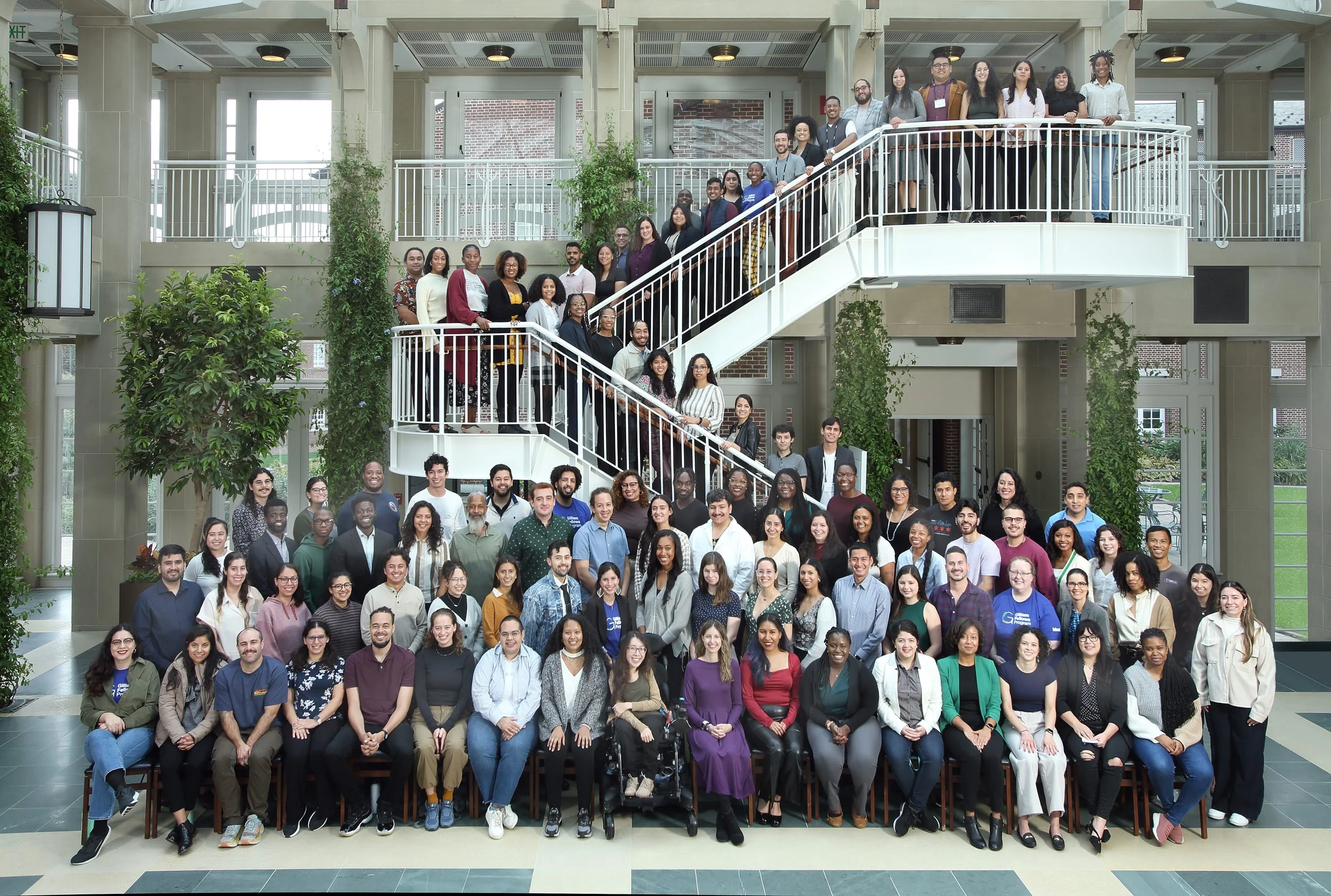
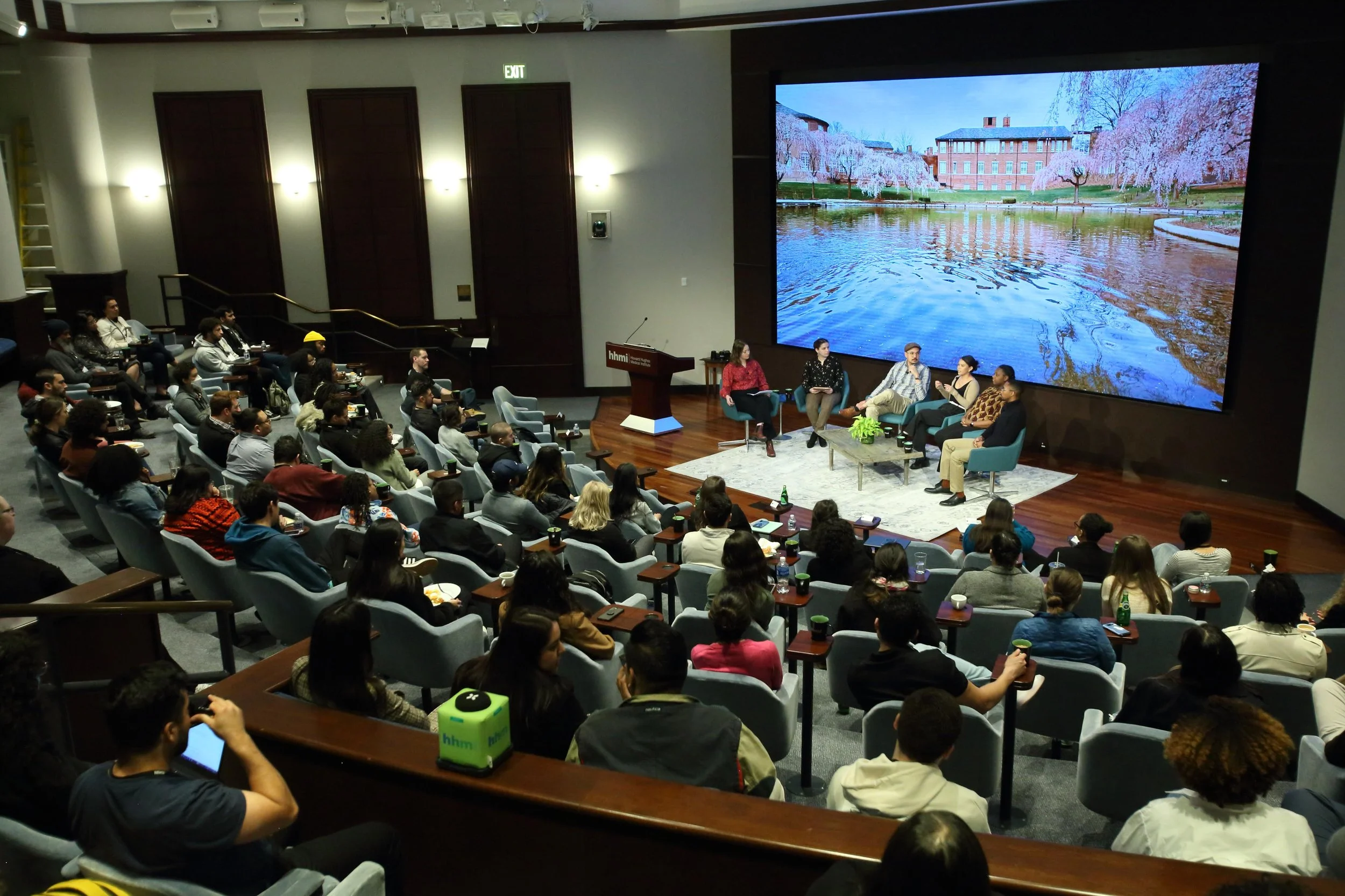
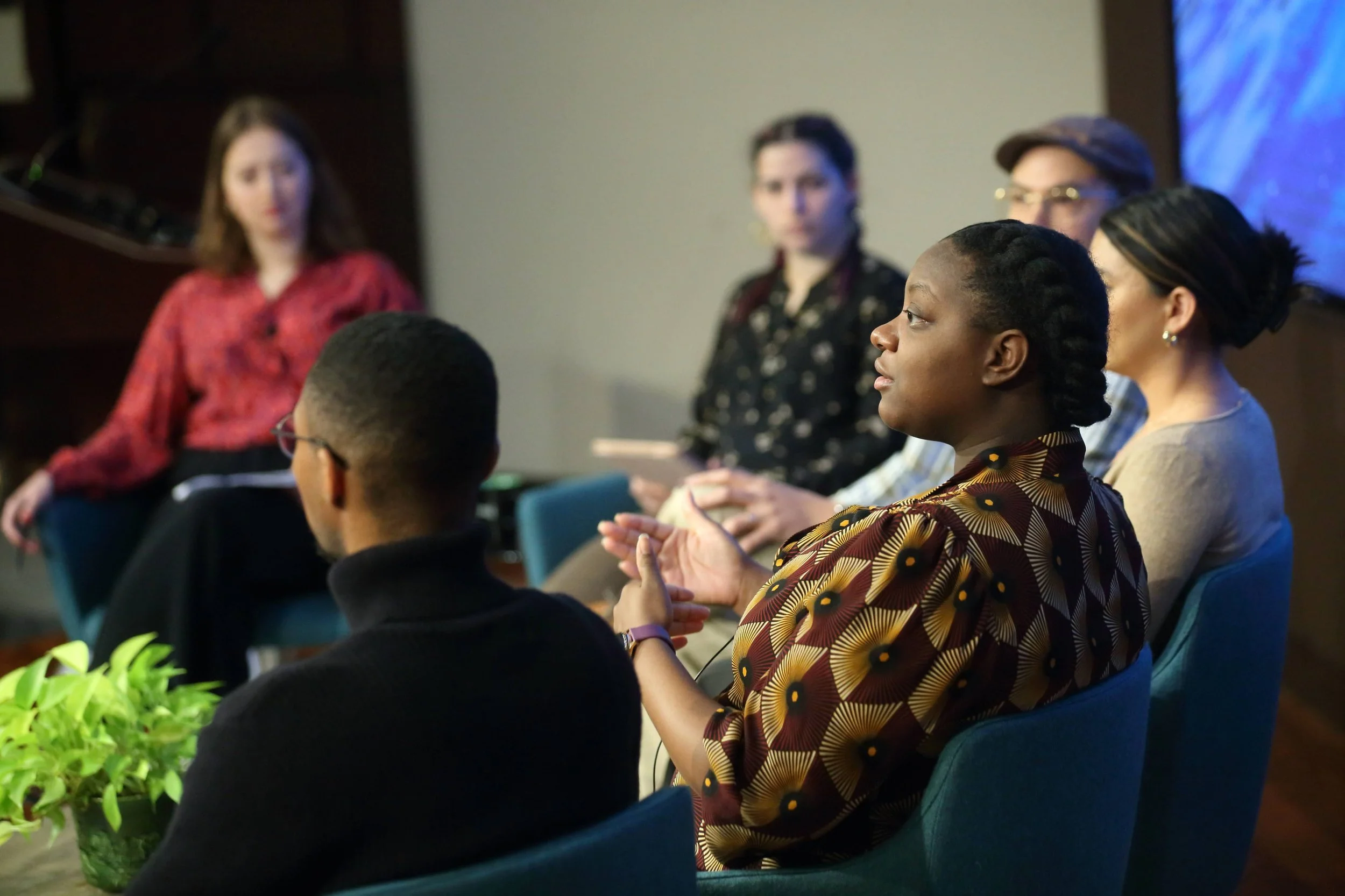
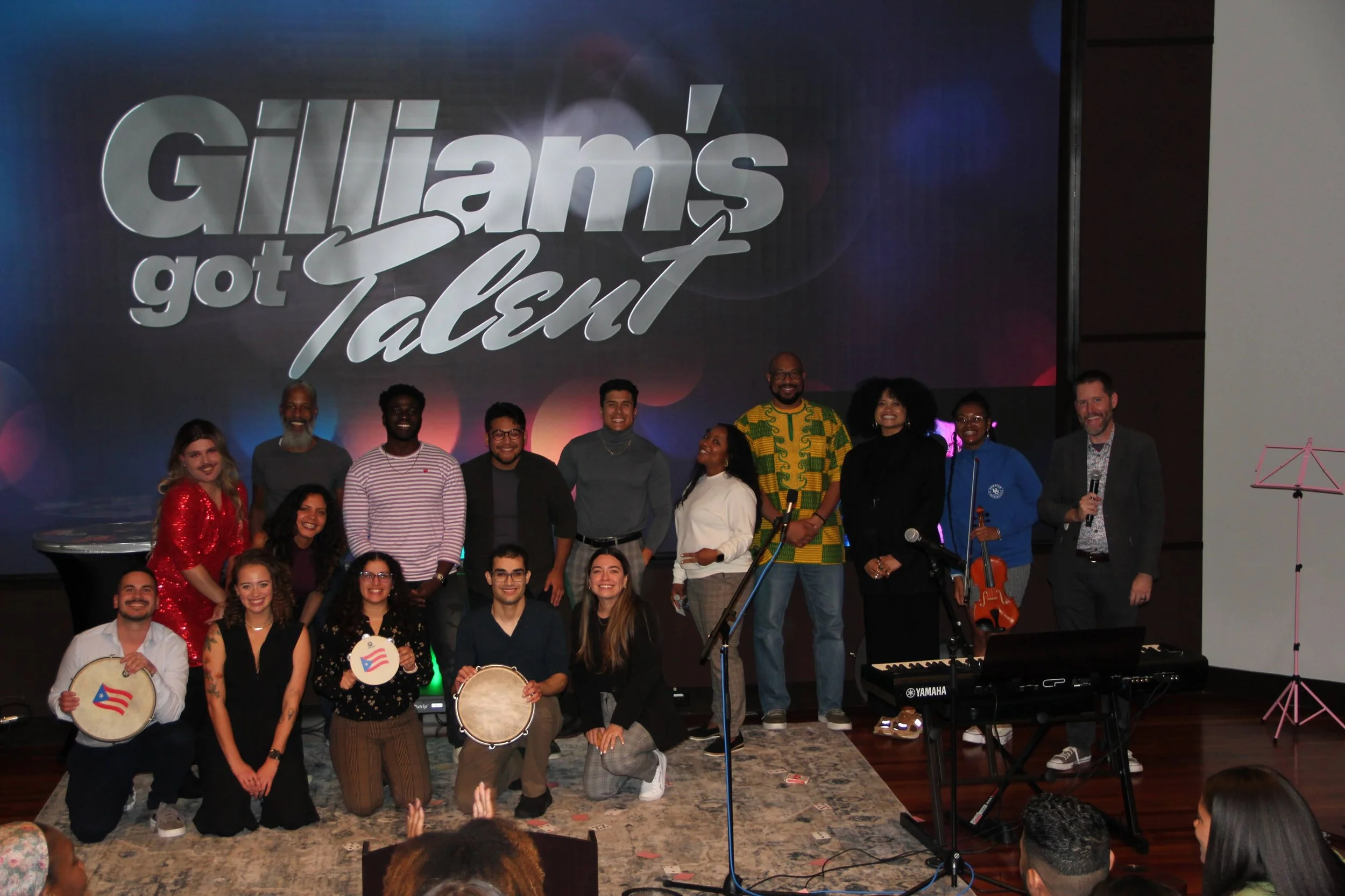
It comes with community, not just money. Gilliam Fellows join a network of more than 100 current peers and hundreds of alumni, and meet regularly through annual gatherings, professional development programming, and peer connections that often last well past the fellowship term. The community is consistently the part of the fellowship that current fellows say matters most.
The funding is generous and the program is structured around long-term development. As of the current cycle, the Gilliam can also support fellows beyond their PhD with a postdoc transition pathway (more on this below).
What HHMI Is Actually Looking For
Before you start writing, it helps to understand what reviewers are evaluating. The 2027 guide names three things. First, your scientific creativity and how clearly you can communicate your research to someone outside your subfield. Second, your commitment to a career in scientific research. Third, you and your advisor's demonstrated and ongoing commitment to advancing excellence and inclusion in science, shown through your experiences, perspectives, and concrete plans for building inclusive research environments.
Mentorship and leadership run through all three, since the application asks your advisor to lay out a real mentoring plan and asks you to reflect on your growth as an emerging leader. The strongest applicants don't treat these as separate boxes to check. They show how the threads connect in their actual work.
Eligibility for the 2027 Competition
The 2027 Gilliam competition opens September 1, 2026 and closes October 27, 2026. Eligibility has expanded significantly compared to past cycles, and the rules apply to second- and third-year PhD students at eligible HHMI institutions in the United States.
The recent changes worth knowing:
International PhD students can now apply. Previously, the fellowship was limited to U.S. citizens, permanent residents, and DACA recipients. International students who are enrolled at eligible U.S. institutions and able to receive funding from their graduate institution consistent with law are now eligible.
Students in dual-degree programs (like MD-PhD or DVM-PhD) can now apply. These students were explicitly excluded in past cycles. They're now welcome.
The competition is no longer limited to applicants from historically underrepresented groups. Earlier cycles restricted eligibility on that basis. The 2027 guide drops that requirement and states plainly that HHMI seeks a broad applicant pool and encourages applications from individuals of all backgrounds, experiences, and perspectives. If you assumed you weren't eligible on those grounds, that assumption no longer holds.
Beyond these expansions, the eligibility basics are: you should be in your second or third year of a PhD program in the biological or biomedical sciences (as of the October 27, 2026 close date), with at least two full years of study remaining as of the start of the fellowship term. Eligibility is based on total years in your graduate program, not years in your current lab, so switching labs doesn't reset the clock. You and your thesis advisor apply jointly. You should be able to point to a real commitment to advancing inclusion in science, whether through past activities, current work, or both.
One important constraint: you and your advisor must be at an HHMI eligible institution. Not all U.S. universities and research institutes qualify. The list is long (around 270 institutions and growing) and includes most major research universities, medical schools, and independent research institutes, but it's worth checking before you start drafting anything. You can see the full list of eligible HHMI institutions here.
Key Dates for the 2027 Competition
HHMI has published the full 2027 timeline. Applications open Tuesday, September 1, 2026 at 9:00 AM ET and close Tuesday, October 27, 2026 at 11:59 PM ET. Award notifications go out in summer 2027, and the fellowship term begins September 1, 2027.
One thing to flag if you're working from older guides or advice: the deadline moved earlier. For years the Gilliam closed in early December, but the 2027 competition closes October 27. That's a real difference in your drafting runway, so plan backward from late October, not December.
If you're awarded and need more time, an initial one-year deferral is allowed. It has to be approved by HHMI at the time of award notification.
Award Details (Including the New Postdoc Pathway)
For PhD students, the Gilliam provides up to three years of dissertation support. For the 2027 cohort, the total is $65,000 per year. That breaks down into a $50,000 annual stipend, a $5,000 discretionary allowance for professional development, and a $10,000 institutional allowance that offsets tuition, university-sponsored health insurance, and fees.
The discretionary allowance is flexible. You can put it toward scientific meetings, workshops, and courses, but also toward dependent care and non-elective medical, dental, vision, and mental health services. Up to $1,000 a year can go to food or housing costs, and a portion can go toward computing equipment for your research. One limit worth knowing: Gilliam funds can't cover your research costs (consumable supplies and equipment) or institutional indirect costs. Paying for your actual research stays with your advisor.
A note if you're comparing this guide to older ones. The award changed for 2027. The stipend went up substantially (it was $36,000 as recently as the 2025 cycle), and the separate community engagement allowance that earlier cohorts received was removed. If you've read that Gilliam includes a community engagement project or allowance, that was true for past cycles but isn't part of the 2027 award.
The biggest structural change to the program is the postdoc pathway. Starting with the current cycle, Gilliam PhD Fellows who want to pursue an independent academic research career can apply for up to four additional years of postdoctoral support after finishing their PhD. Gilliam Postdoc Fellows receive a competitive stipend or salary (the exact amount depends on lab placement and employment status) plus research support, and they can propose any lab at an eligible institution in the country. A single fellow could receive up to seven years of HHMI funding across the PhD and postdoc phases combined. Progression isn't automatic. The postdoc phase is a separate selection that weighs your graduate research accomplishments, your intention to run an independent academic lab, and the fit of your proposed training environment.
Fellows also can't receive funds from another extramurally funded fellowship during the term. If you're also applying for the GRFP or F31 and you win both, you'll need to relinquish the other award before activating Gilliam, or defer Gilliam for a year.
Is the Gilliam Fellowship Right for You?
Before you commit to applying, take an honest look at whether your goals and values align with what the fellowship is funding. The application is substantial and your advisor's commitment is real, so this isn't something to apply to casually.
Some questions worth sitting with:
Do you have a track record of advancing inclusion in science, or a clear desire to start?
Does that commitment extend beyond your own lab, into your department, field, or community? Reviewers are looking for more than lab mentoring alone.
Is your advisor willing to participate in a year-long mentorship development course and engage deeply with the program?
Would you find real value in a community of scientists committed to similar work?
If the answers are yes, the Gilliam can be one of the most rewarding fellowships you'll be part of. If you're hesitant about any of these (especially the advisor commitment piece), it's worth being honest about that before you start the application.
If the Gilliam doesn't feel right but you still want strong PhD funding, the NSF GRFP and NIH F31 are excellent options with different focuses. They're worth considering in parallel.
Ensuring Your Advisor Is Fully On Board
This part is critical. The Gilliam asks more from your advisor than any other fellowship I know of, and a half-committed advisor will hurt your application more than help it. Before you start drafting anything, sit down with your advisor and have a real conversation about what they're signing up for
Your advisor will need to write substantial materials of their own. That includes a mentoring plan (their lab culture and how they'll support your development), a statement on the specific ways they foster a healthy research environment for students, postdocs, and early-career faculty, information on their background and contributions to science, a list of the grants that will fund your project, and a two-page letter of support about you. These aren't recommendation letters. They're full components evaluated alongside yours.
If you win, your advisor commits to a year-long mentorship development course run by HHMI. For the 2027 cohort that runs as monthly online webinars from October 2027 through March 2028, plus one in-person workshop in spring 2028. It's a meaningful time commitment, and they should know that going in. If your advisor can't do the course in 2027 to 2028, they can request a one-year delay and take it in 2028 to 2029, even if you've already graduated. And if they've completed the HHMI mentorship course within the last two years, they can either take it again or nominate a faculty colleague, like a member of your thesis committee, to participate in their place.
Most importantly, your advisor's commitment to inclusion in science needs to be real. Reviewers are good at spotting advisors who are participating because their student is applying versus advisors who are actually invested in this work. If your advisor isn't naturally engaged with mentorship and inclusion, this might not be the right fellowship for either of you.
Once you've had this conversation and your advisor is fully on board, the joint nature of the application becomes a real asset. You can craft essays that present a unified vision of what you'll do together.
Changes to the Application Process
Beyond the eligibility expansion, several changes over the past few cycles are worth knowing if you're using older guides or example materials as references.
The fellowship is now an open competition, with no nomination step. When I applied, each institution could only put forward a limited number of student-advisor pairs. Now any eligible pair can apply directly.
The research overview is shorter than it used to be, now three pages rather than the five I had. That's a real constraint, and you'll need to be much more concise than my materials were.
There's less emphasis on traditional publication metrics. The program weighs a holistic view of your contributions, including teaching, mentorship, outreach, and inclusion work. This was implicit before and is now formalized.
The community engagement component is gone, and the stipend went up. Earlier cohorts received a separate allowance to run a community-facing science project, and the application asked you to propose that project. For 2027, that allowance and its application component have been removed, and the base stipend increased instead. If you're borrowing from a 2023 to 2025 applicant's materials, you can skip the community engagement plan entirely.
The program centers your commitment to a research career and reads your goals holistically. Just note that the postdoc extension specifically supports fellows aiming for independent academic research careers, so if that's your path, say so clearly.
A Note on Language and Framing for 2027
HHMI's public language about the fellowship has shifted over the past few years, partly in response to the political and legal climate around DEI programs in higher education. The mission hasn't changed. The program still funds pairs committed to inclusive scientific training environments. But the framing has moved toward "excellence and inclusion" and "inclusive training environments," and away from language centered on underrepresentation.
You can see this in the 2027 guide itself, which is now published. It asks about your commitment to advancing excellence and inclusion in science and never uses "diversity," "equity," or "DEI." The eligibility section also no longer restricts the competition to applicants from underrepresented groups, and states plainly that HHMI welcomes applications from individuals of all backgrounds.
For your application, a few things follow. Read the 2027 guide's exact wording and mirror the framing it uses. Your statements should still center an authentic commitment to advancing inclusion, but the specific language is worth calibrating to the current moment. This is one area where personalized coaching helps, because the right framing depends on your specific story.
A Rule That Applies Across Your Whole Application: No Journal Names
This one is new for 2027 and easy to miss. HHMI asks applicants to leave journal names out of every part of the application, whether you're citing a published paper or referring to a manuscript that's in preparation, under review, accepted, or in press. The reasoning is that reviewers should weigh the science itself, not where it landed.
When you cite a primary research article, use this format: full author list, article title, year, and PMID. For preprints or anything not indexed on PubMed, use a DOI instead. This applies to your contributions list, your research overview and its reference list, and your advisor's list of relevant articles. If you're reusing text from other applications, do a dedicated pass to strip journal names before you submit.
The Application Components
Here's a walkthrough of each piece of the application as it stands for 2027. For the essay components, I've also shared my own materials with full annotations. Those are the best place to see how these come together in practice.
Contributions to Science
You'll list up to five contributions to science. These don't have to be publications. The program takes a holistic view, so include what's actually shaped your scientific identity: research projects, presentations, teaching experiences, mentorship work, outreach, and activities that advance inclusion in science.
For each one, give context. What was your role, what was the impact, and what did you learn? Avoid subfield jargon, since reviewers may not share your specialty. And don't pad the list to hit five. A strong list of three beats a list of five with two weak entries. Remember the journal-name rule here too.
Dissertation Research Project Overview
You have three pages, including text and figures, to present your research. This is the most substantial scientific component, and it has to be written by you, not your advisor. It also has to be readable by a scientist outside your immediate field.
A strong overview usually covers background and significance, an overarching hypothesis or central question, two specific aims with clear sub-aims, the approach for each aim (with anticipated results and limitations), and a short perspective that closes the argument. Three pages is tight. Cite relevant literature, which uploads as a separate document, and keep journal names out of the citations.
For the level of detail and the structural choices I made, see my annotated research plan, which walks through the actual text of my Background, Hypothesis, Specific Aims, and a complete worked example of Aim 1A. Note that mine was written to a five-page limit, so use it for structure and reasoning rather than length.
Leadership Prompts
The 2027 application uses a set of leadership prompts. These ask you to describe specific experiences that shaped your commitment to advancing excellence and inclusion in science, what those experiences taught you about yourself as an emerging leader, and how you're putting those lessons into action in your research environment right now.
If you've read older guides, this is where the separate "equity and inclusion statement" and "scientific leadership statement" have effectively merged. So two things matter at once.
First, the inclusion piece. Ground it in specific experiences or values that are real to you, show what you've actually done, and connect forward to what you plan to do. Be specific. "I've mentored underrepresented students" is forgettable. The exact program, the number of students, and the outcomes you helped them reach are what stick. And reviewers are looking for commitment that reaches past your own lab, into your department, field, or community, so lab mentoring alone usually isn't enough to carry this.
Second, the leadership piece. Use concrete stories. Two stories told well beat five crammed together. Show how you actually lead rather than describing a leadership philosophy in the abstract. My annotated Scientific Leadership Statement shows what this can look like, including why I opened with a story about managing at a Wendy's instead of a story about leading a science project. That material maps directly onto these prompts.
Above all, be authentic. Reviewers read hundreds of these, and they can tell the difference between performing a commitment and living it.
Career Statement
You'll describe your scientific and professional goals, your plan for pursuing them during your PhD, your advisor's role in your development, and how the fellowship supports your growth as a researcher and future leader. Be honest about where you actually want to go.
The strongest career statements don't just list goals. They connect a personal trajectory to a forward-looking vision in a way that feels coherent rather than assembled. Why this work? Why this path? What will you do with the position you're aiming for? See my annotated Career Statement for a worked example.
Joint Conflict Resolution Statement
You and your advisor write this one together. It lays out the strategies you'll use to resolve conflicts over the course of your working relationship as a student-advisor pair.
Reviewers want awareness and a real plan, not a claim that conflict will never happen. Talk it through with your advisor before you write, since the statement is joint and your strategies actually need to match. A short, concrete plan for how you'll raise problems early and work through them beats a vague promise to communicate well.
Letter of Support from a Faculty Member
You'll need a letter from a faculty member other than your advisor who knows you well and can speak to your scientific promise and your commitment to inclusion. This is someone like a former research mentor or a member of your thesis committee. Choose someone who actually knows you, not just someone with a big title. Share your materials with them so their letter complements your essays rather than duplicating them, and remember that you're responsible for reminding them to submit by the deadline.
Working with Your Advisor on the Application
Once your advisor is fully on board, the joint application becomes a real opportunity. You can shape your essays so that your vision and your advisor's vision present a unified front.
A few things that help: have an early conversation about the big themes you want to emphasize, share drafts with each other so you can identify gaps and contradictions, and make sure your materials and your advisor's actually align. If you're describing a shared vision for your training, your advisor's mentoring plan needs to reflect it.
Your advisor submits several components of their own: information on their background and contributions to science, a list of the grants that will fund your project, a two-page letter of support about you, a mentoring plan that covers their lab culture and a tailored plan for your development, and a statement on the specific ways they foster a healthy research environment for students, postdocs, and early-career faculty. Their interest in the mentorship development course is part of the mentoring plan.
Encourage your advisor to be authentic in their materials, especially where they describe what they hope to gain from the mentorship course. Reviewers can tell when an advisor is going through the motions versus actually excited about growing as a mentor.
Practical Tips
Start early. The Gilliam application is one of the more substantial fellowship applications you'll write, and it gets much better with multiple drafts. If you wait until October to start, you'll be drafting in panic mode and your essays will show it. Remember the deadline is late October, not December.
Get feedback from people who know the fellowship. Generic writing feedback is helpful, but feedback from someone who has seen successful Gilliam applications (or written one) is more useful. Other fellows are often willing to share their materials if you ask.
Read aloud. This is the single most effective revision technique I know. Awkward phrasing, repetition, and sentences that sound smart on the page but don't actually mean anything will all jump out when you hear them.
Match your essays to the page limits without padding. A one-page Career Statement that does its job is better than a two-page Career Statement that wanders. Reviewers notice padding immediately.
Be specific. Specificity is the single biggest difference between memorable and forgettable application essays. Concrete numbers, specific names, real moments. Avoid abstractions wherever you can.
Do a journal-name pass. Before you submit, reread every component and citation and make sure no journal names slipped in. This is a real requirement for 2027, and it's the kind of thing that's easy to overlook when you're reusing text.
Final Thoughts
If you're considering the Gilliam, here's my honest take. This fellowship is meaningful in ways that go beyond the funding. The community is real, the professional development is real, the mentorship development course actually shapes how your advisor mentors you, and the postdoc pathway (newly available) extends that support significantly. If you're committed to the mission, applying is worth the effort even if you don't ultimately receive the award. The act of writing the application, articulating your values, and having serious conversations with your advisor about your shared vision is valuable in itself.
If the mission doesn't resonate with you, please apply somewhere else. Not because the Gilliam wouldn't fund your science, but because the program is built around a community of people who are deeply invested in this work, and it's a much better experience for everyone (including you) when applicants are aligned with what the fellowship is actually about.
Whatever you decide, I'm rooting for you. The scientific community is stronger when more of us are doing this work, and the application process itself, regardless of outcome, is one of the most useful self-reflection exercises you'll do in your PhD.
Other Resources
HHMI Gilliam Fellow Lillian Horin's video: Winning the HHMI Gilliam Fellowship (even with the app changes)
Cientifico Latino webinar with 2017 Gilliam Fellow Dr. Titilayo Omotade: Applying to the HHMI Gilliam Fellowships for Advanced Study (some details have changed but the core advice still holds)
2024 Cientifico Latino webinar Grad School 101: Applying to Fellowships, where I speak about the HHMI Gilliam program
Want personalized feedback on your Gilliam application? I offer one-on-one fellowship coaching and have helped many students put together strong applications for the Gilliam and other STEM fellowships. Or reach out for a free consultation to talk through whether the fellowship is the right fit for you.